 Image 1 of 5
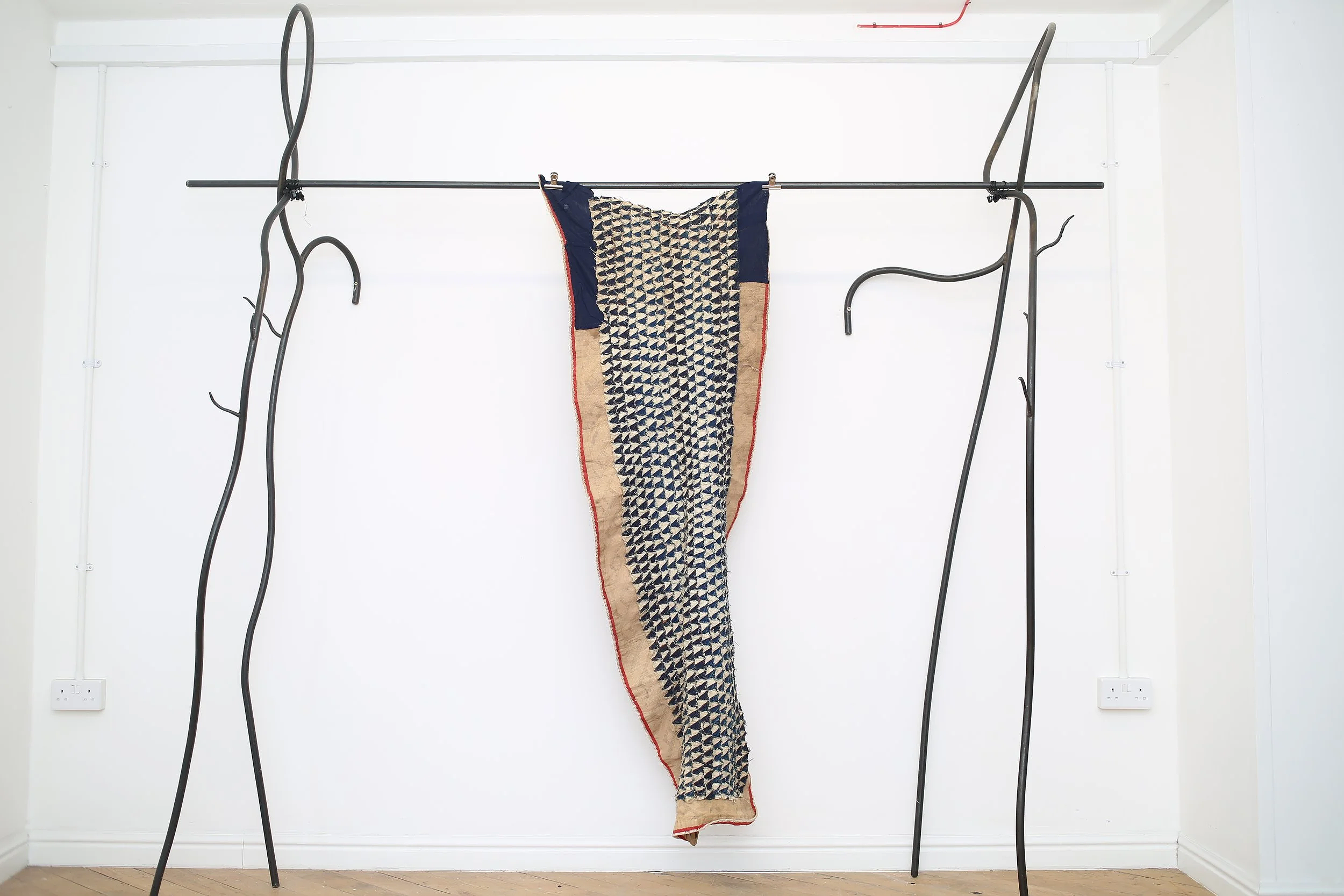 Image 2 of 5
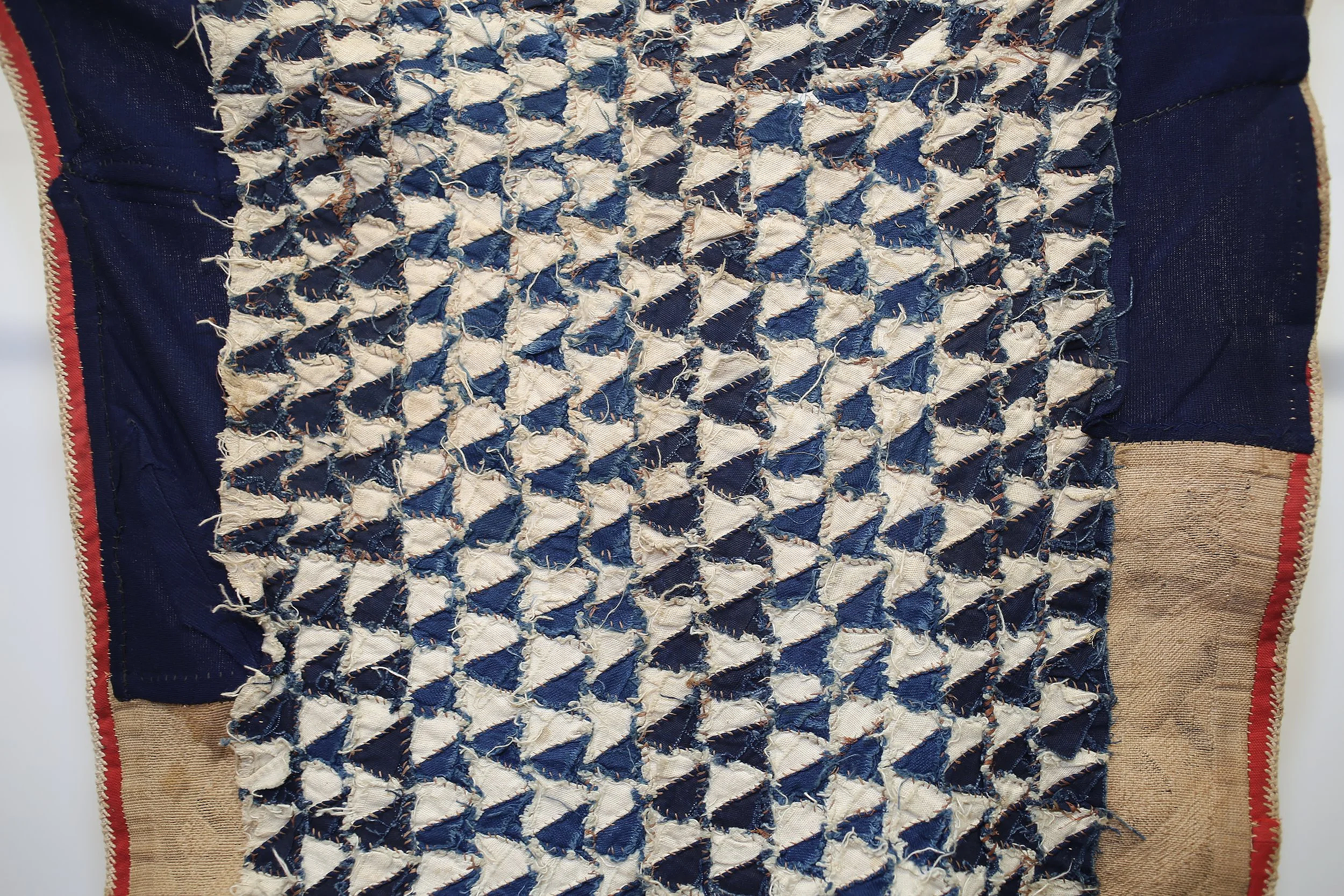 Image 3 of 5
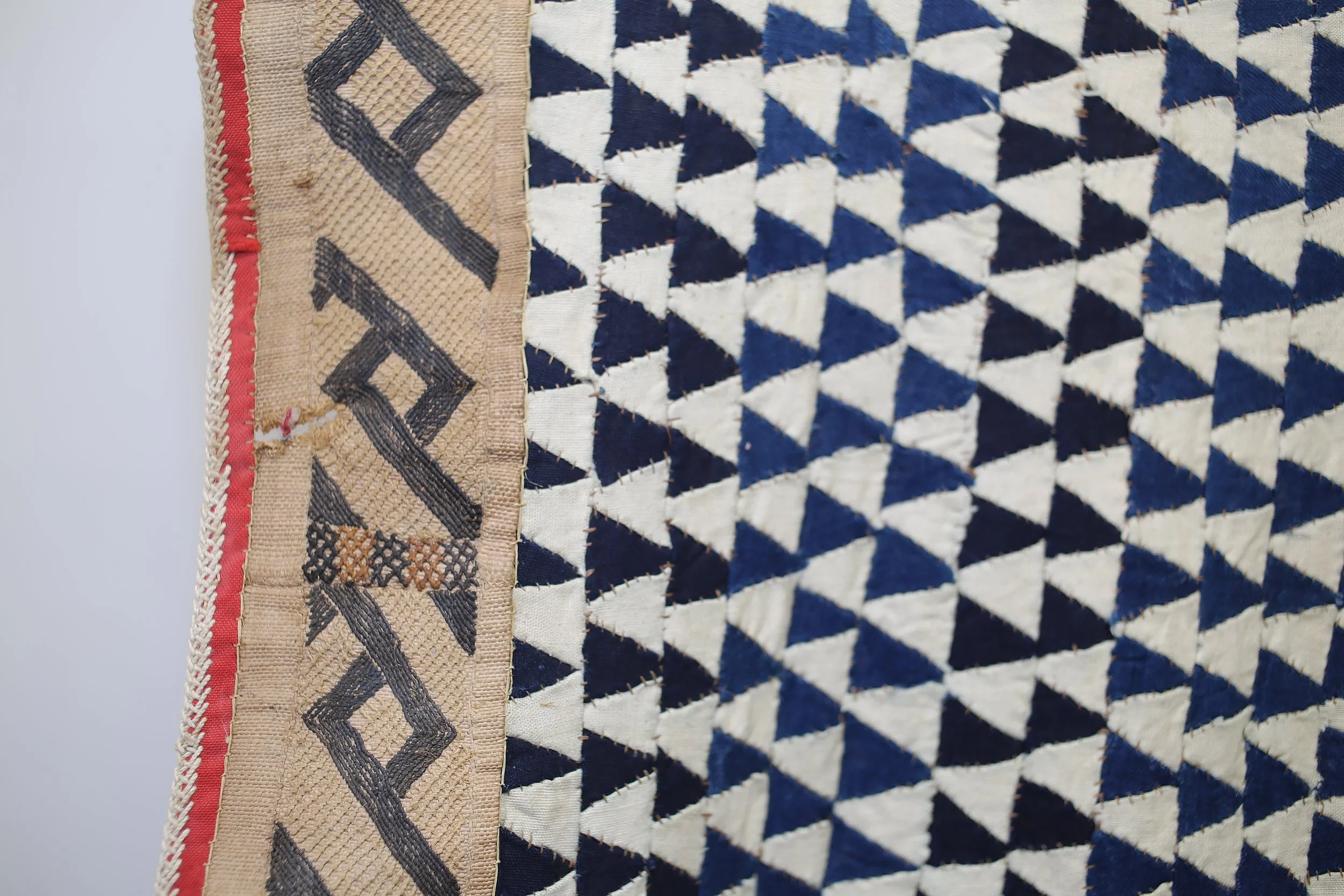 Image 4 of 5
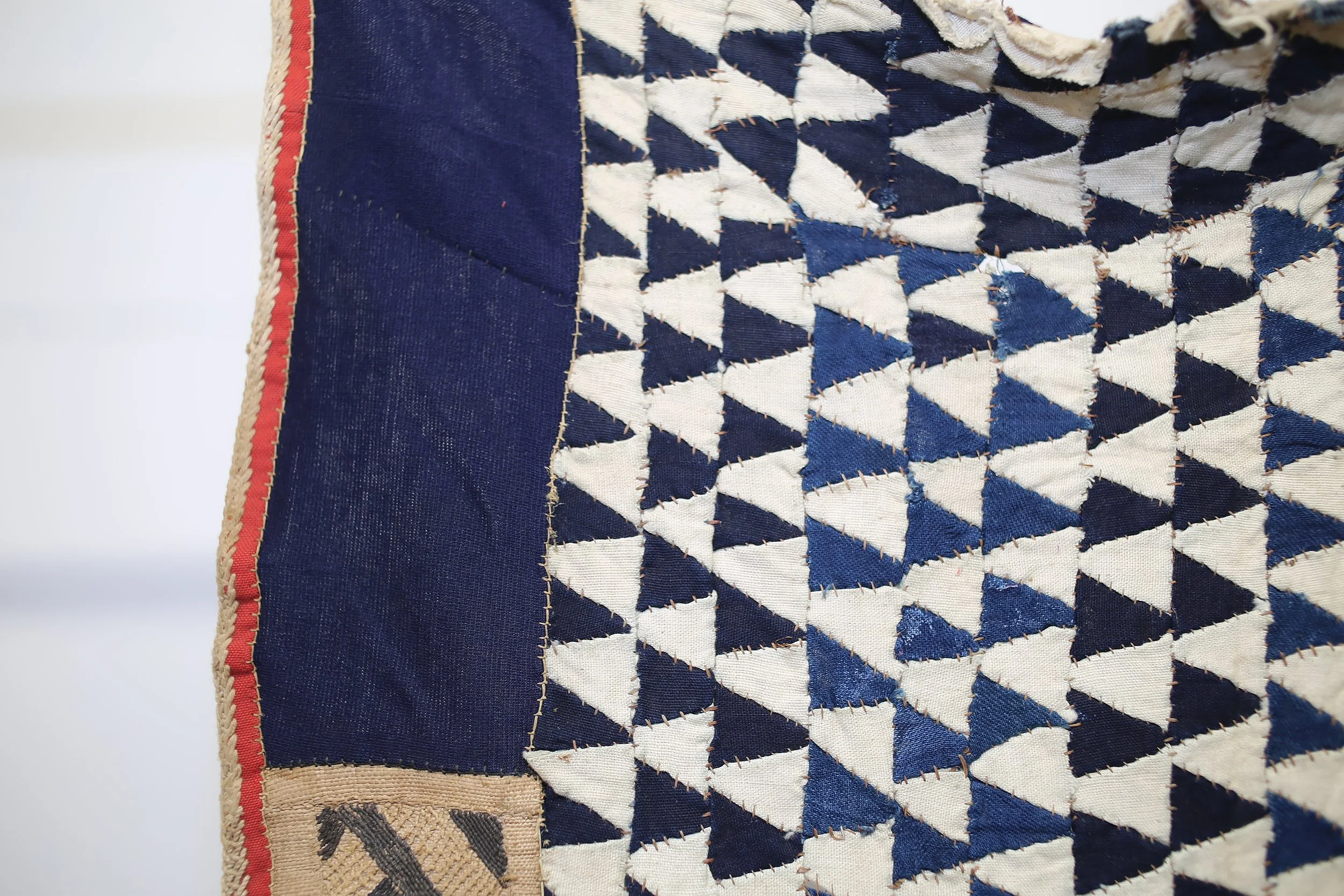 Image 5 of 5
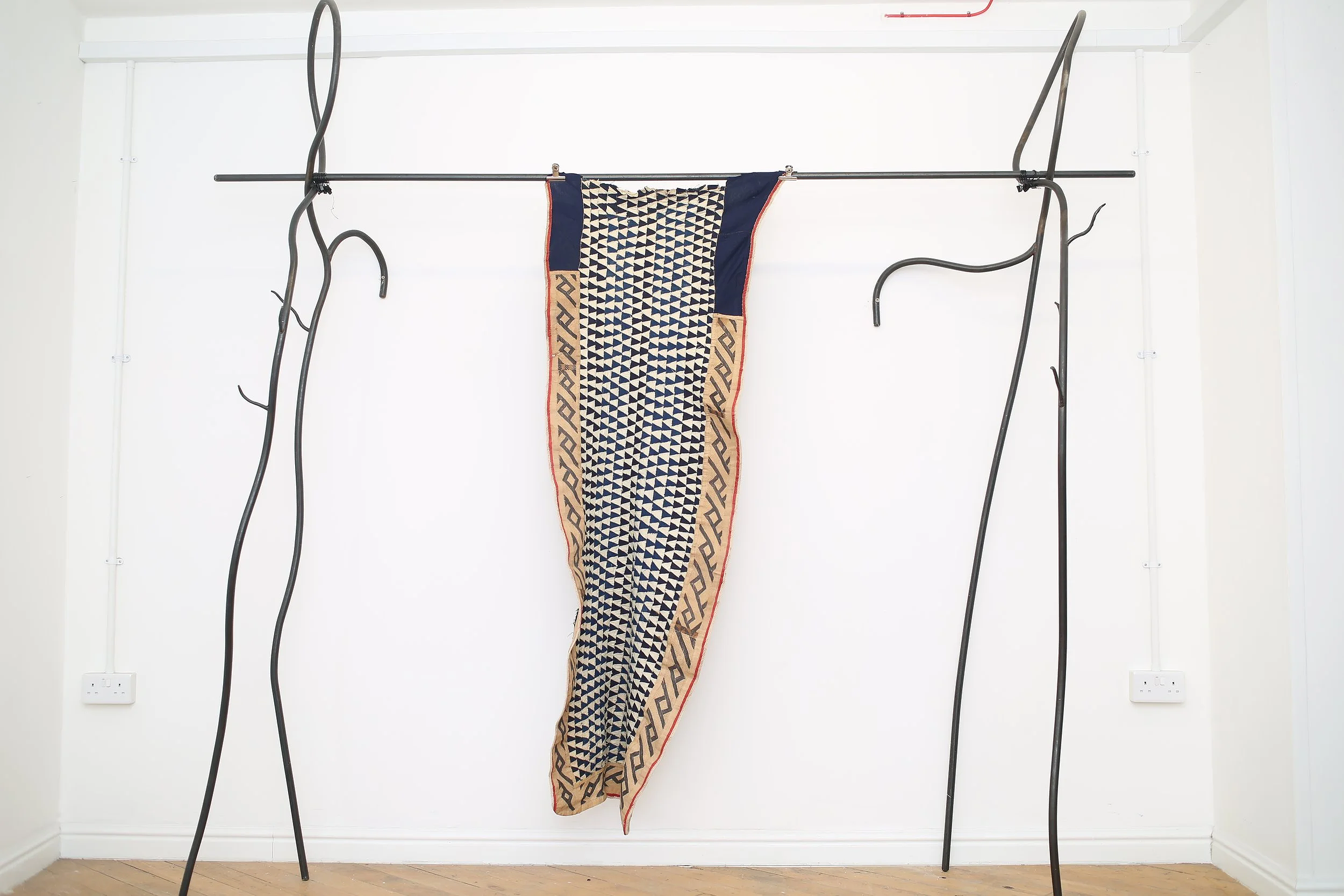
This textile would have traditionally either been used as a cover for royal stools, traded as a form of currency and dowry and even worn as skirt by men and women.
The raphia skirt would be bunched up and wrapped around many times.The Kuba tribe are highly regarded for their rafia work, weaving ‘dance skirts’. Using appliqué, embroidery, cut-pile and resist dyeing techniques, the Kuba have one of the largest textile repertoires in the whole of Africa.
Kuba men weave, while the women embroider and appliqué. Appliqué is used for not only decorative but also utilitarian purposes. Unfortunately, raphia cloth is not very durable, so the pounding often results in holes in the cloth, which the decorative appliqué covers up.
This piece has some damage and stains due to age.
Democratic Republic of Congo.
C. late 20th century.
55×145cm
This textile would have traditionally either been used as a cover for royal stools, traded as a form of currency and dowry and even worn as skirt by men and women.
The raphia skirt would be bunched up and wrapped around many times.The Kuba tribe are highly regarded for their rafia work, weaving ‘dance skirts’. Using appliqué, embroidery, cut-pile and resist dyeing techniques, the Kuba have one of the largest textile repertoires in the whole of Africa.
Kuba men weave, while the women embroider and appliqué. Appliqué is used for not only decorative but also utilitarian purposes. Unfortunately, raphia cloth is not very durable, so the pounding often results in holes in the cloth, which the decorative appliqué covers up.
This piece has some damage and stains due to age.
Democratic Republic of Congo.
C. late 20th century.
55×145cm