This incredible piece is made up of a large handwoven ikat central piece and 4 panels that have been added as a border which have been embroidered and tassels at the top and bottom. A royal crown is shown at the bottom of the textile. The central figure depicts a fighter, surrounded by skulls, showing the story of head hunter. This piece is from the 1970’s. Headhunting became obsolete in the 1940’s.
The motifs are often symbols that represent birth, patriarchal ancestry, social/marital status, and on occasion designate royal lineage. The images on the textiles reflect the island’s Marapu animist faith. Distinctively Sumbanese motifs often include anthropomorphic and mythical creatures, as well the skull tree, a legacy of the days of head-hunting warfare between villages. Horses, water-buffalo and other revered animals signify wealth and status. Often times lobsters, crabs, or creatures that shed their skin are displayed as they symbolize regeneration and renewal. Plants and flowers are often shown in abstraction, and have multiple symbolic meanings
Christianity has been the dominant religion since the dutch colonisation, but an estimated 30% of the indigenous population adheres to the animist practice called Marapu. Despite the transition to Christianity, Marapu still exerts its hold through symbolic and ceremonial rites. Many Christians on the island combine their faith with animist practices. Marapu religion believes in temporary life on earth and an eternal life in the world of spirits in Marapu heaven (Prai Marapu). Marapu teaches that universal life must be balanced and only then can happiness be achieved.
116×263cm
C.1970’s
Cotton.
This incredible piece is made up of a large handwoven ikat central piece and 4 panels that have been added as a border which have been embroidered and tassels at the top and bottom. A royal crown is shown at the bottom of the textile. The central figure depicts a fighter, surrounded by skulls, showing the story of head hunter. This piece is from the 1970’s. Headhunting became obsolete in the 1940’s.
The motifs are often symbols that represent birth, patriarchal ancestry, social/marital status, and on occasion designate royal lineage. The images on the textiles reflect the island’s Marapu animist faith. Distinctively Sumbanese motifs often include anthropomorphic and mythical creatures, as well the skull tree, a legacy of the days of head-hunting warfare between villages. Horses, water-buffalo and other revered animals signify wealth and status. Often times lobsters, crabs, or creatures that shed their skin are displayed as they symbolize regeneration and renewal. Plants and flowers are often shown in abstraction, and have multiple symbolic meanings
Christianity has been the dominant religion since the dutch colonisation, but an estimated 30% of the indigenous population adheres to the animist practice called Marapu. Despite the transition to Christianity, Marapu still exerts its hold through symbolic and ceremonial rites. Many Christians on the island combine their faith with animist practices. Marapu religion believes in temporary life on earth and an eternal life in the world of spirits in Marapu heaven (Prai Marapu). Marapu teaches that universal life must be balanced and only then can happiness be achieved.
116×263cm
C.1970’s
Cotton.
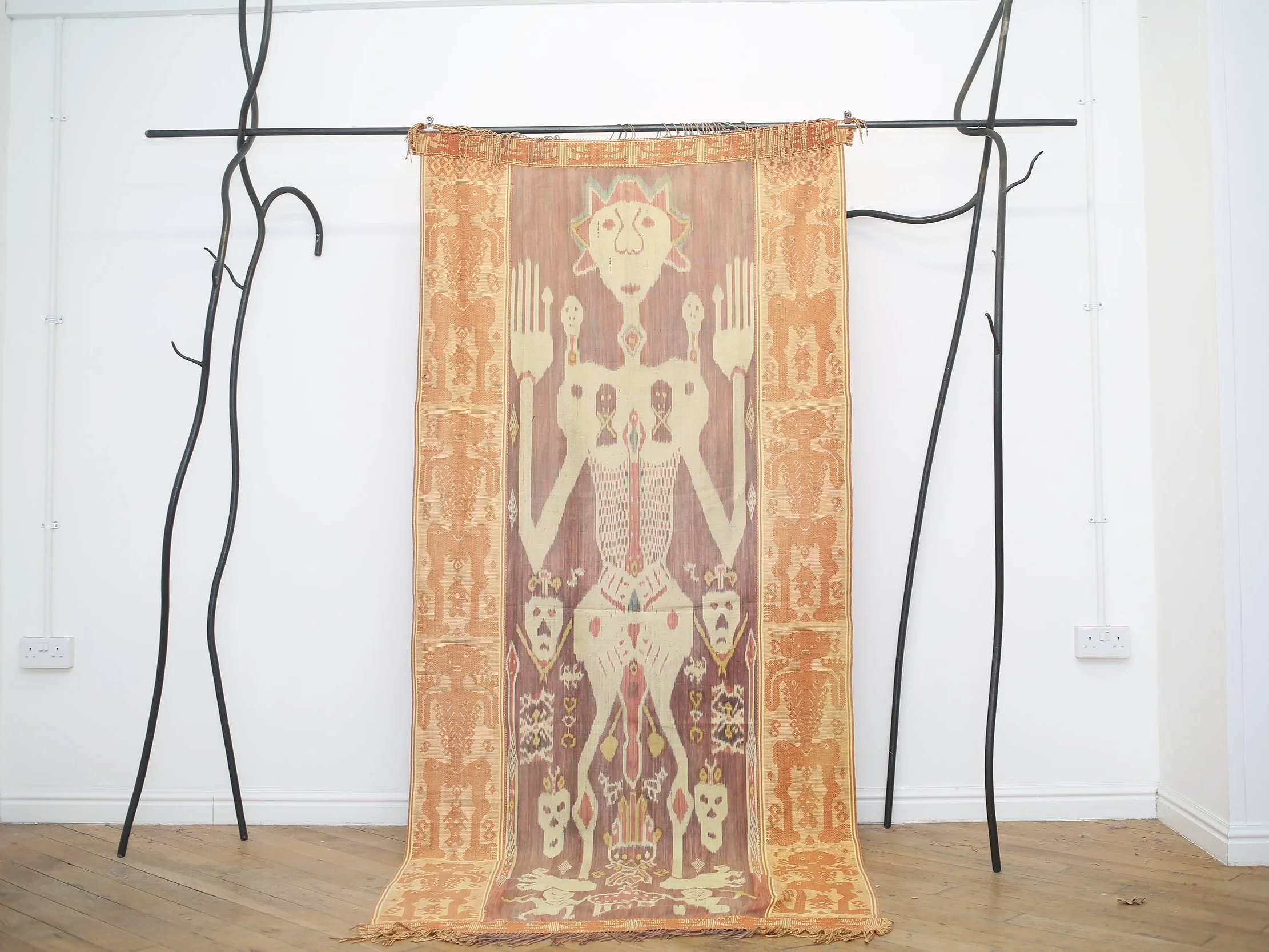 Image 1 of 6
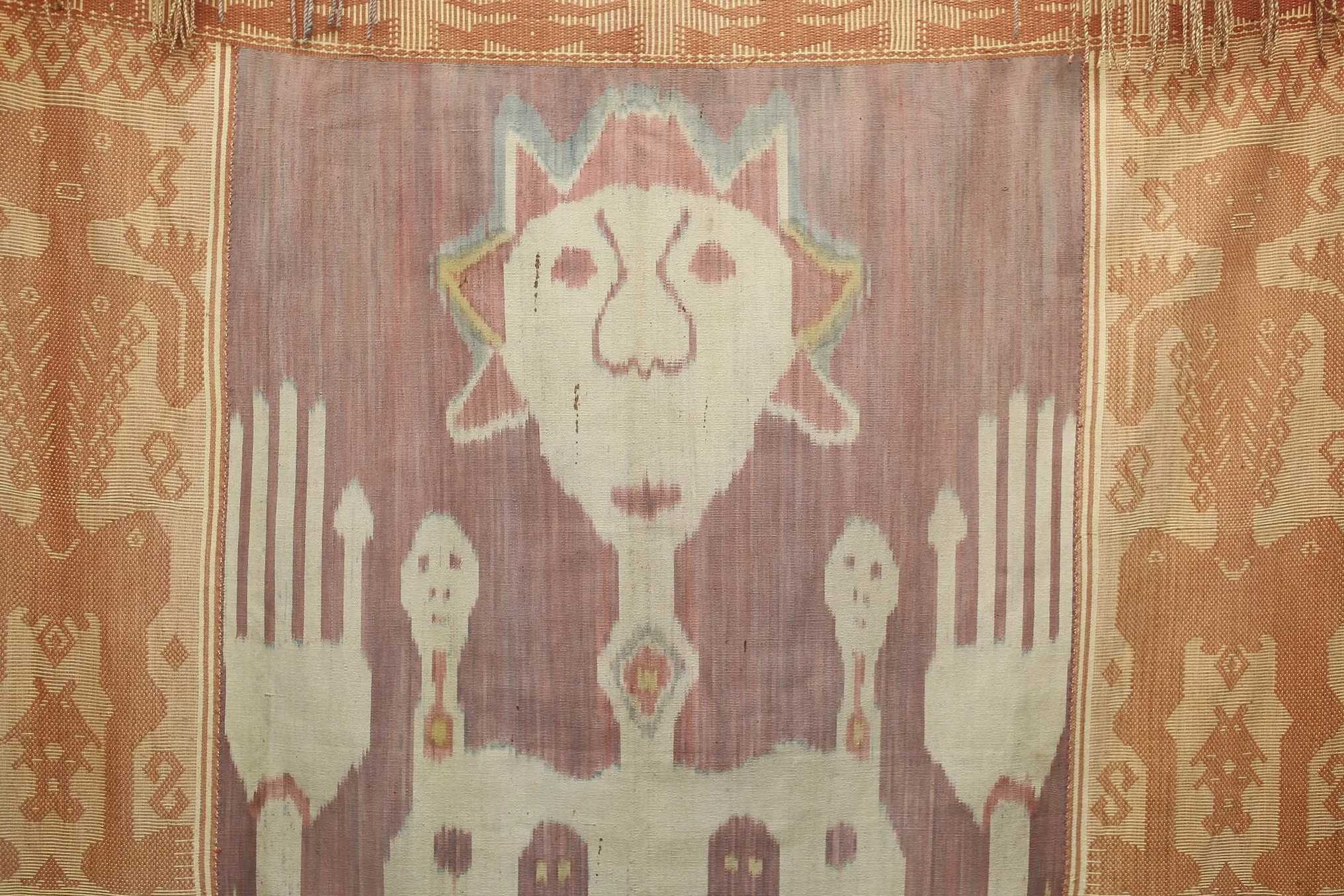 Image 2 of 6
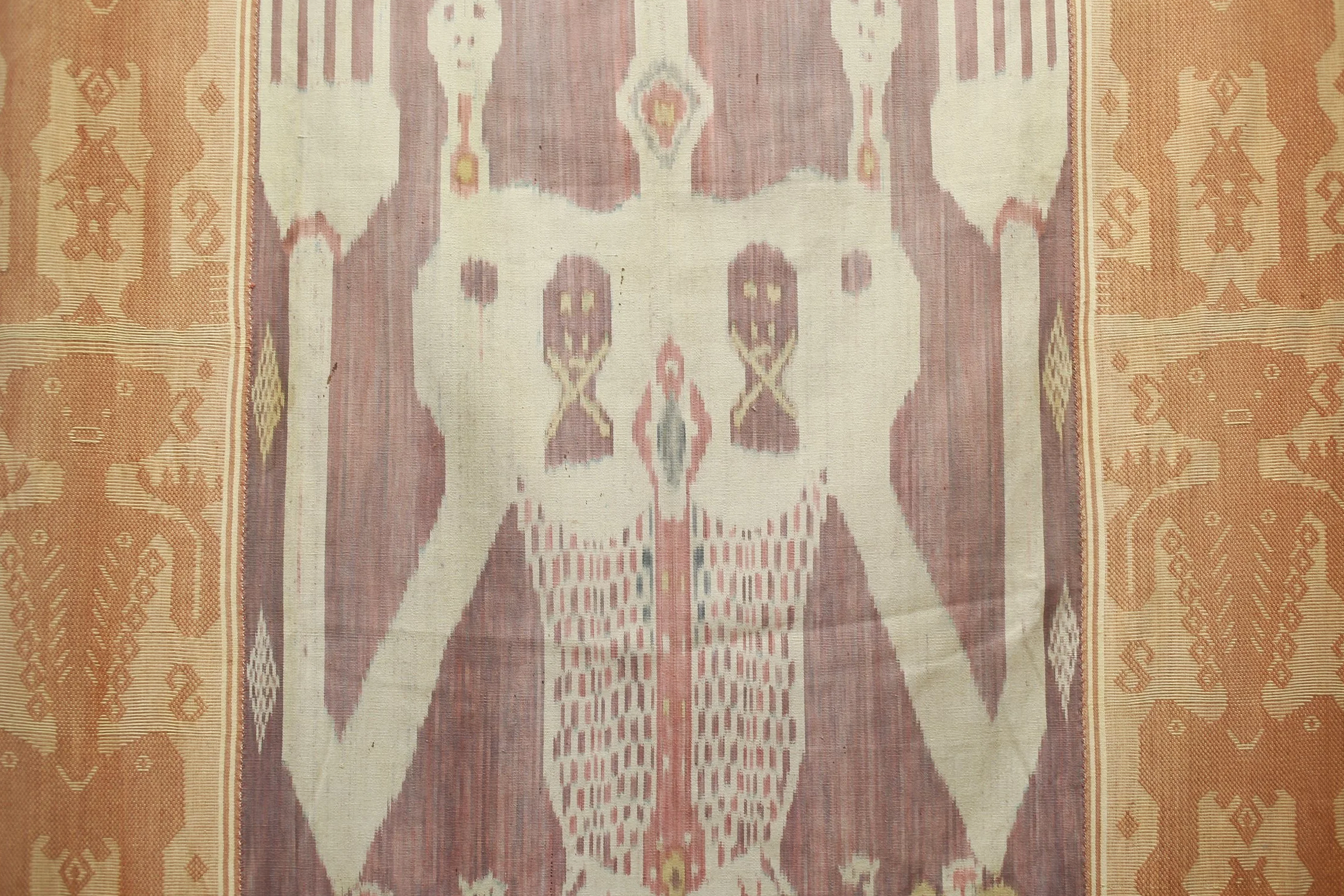 Image 3 of 6
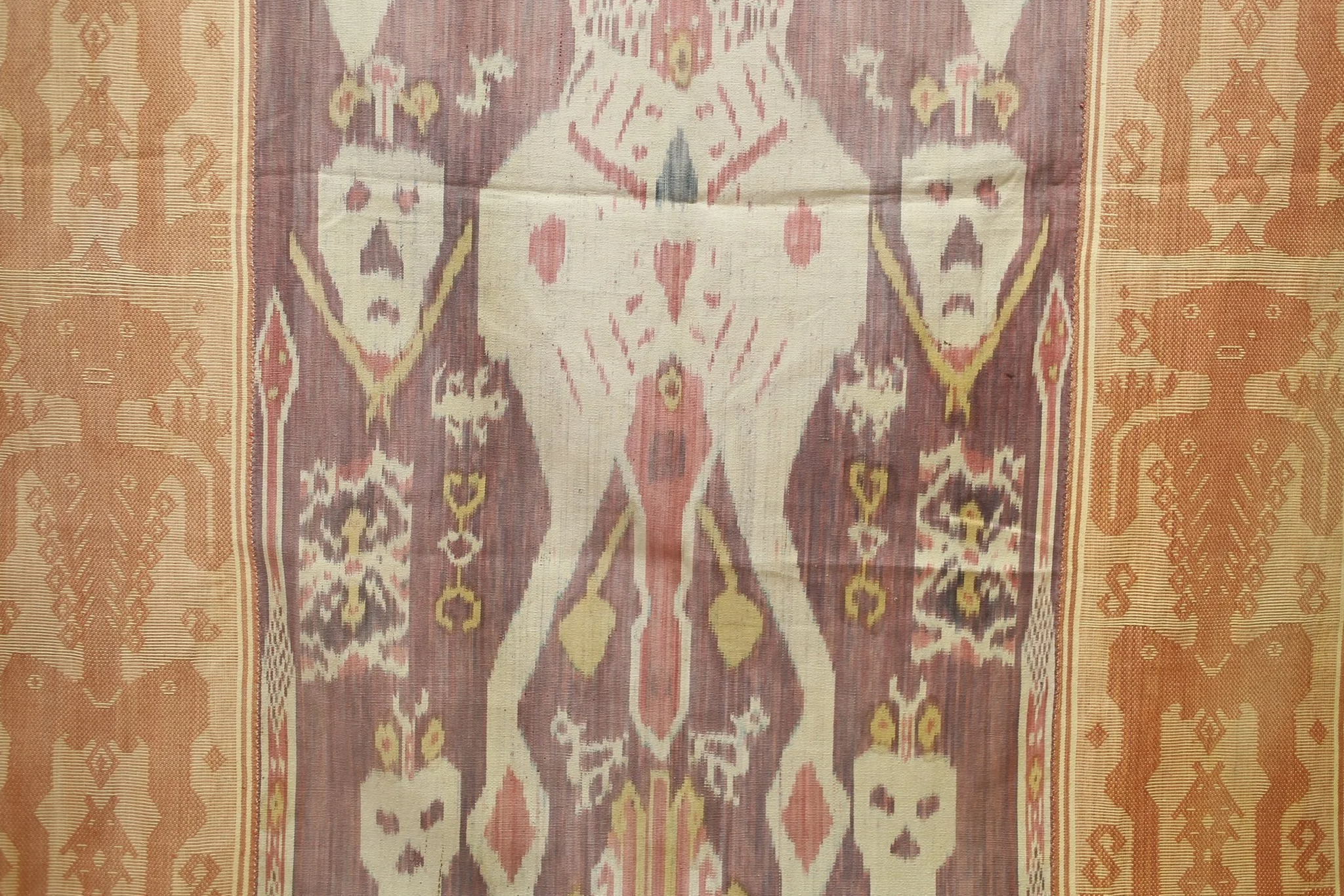 Image 4 of 6
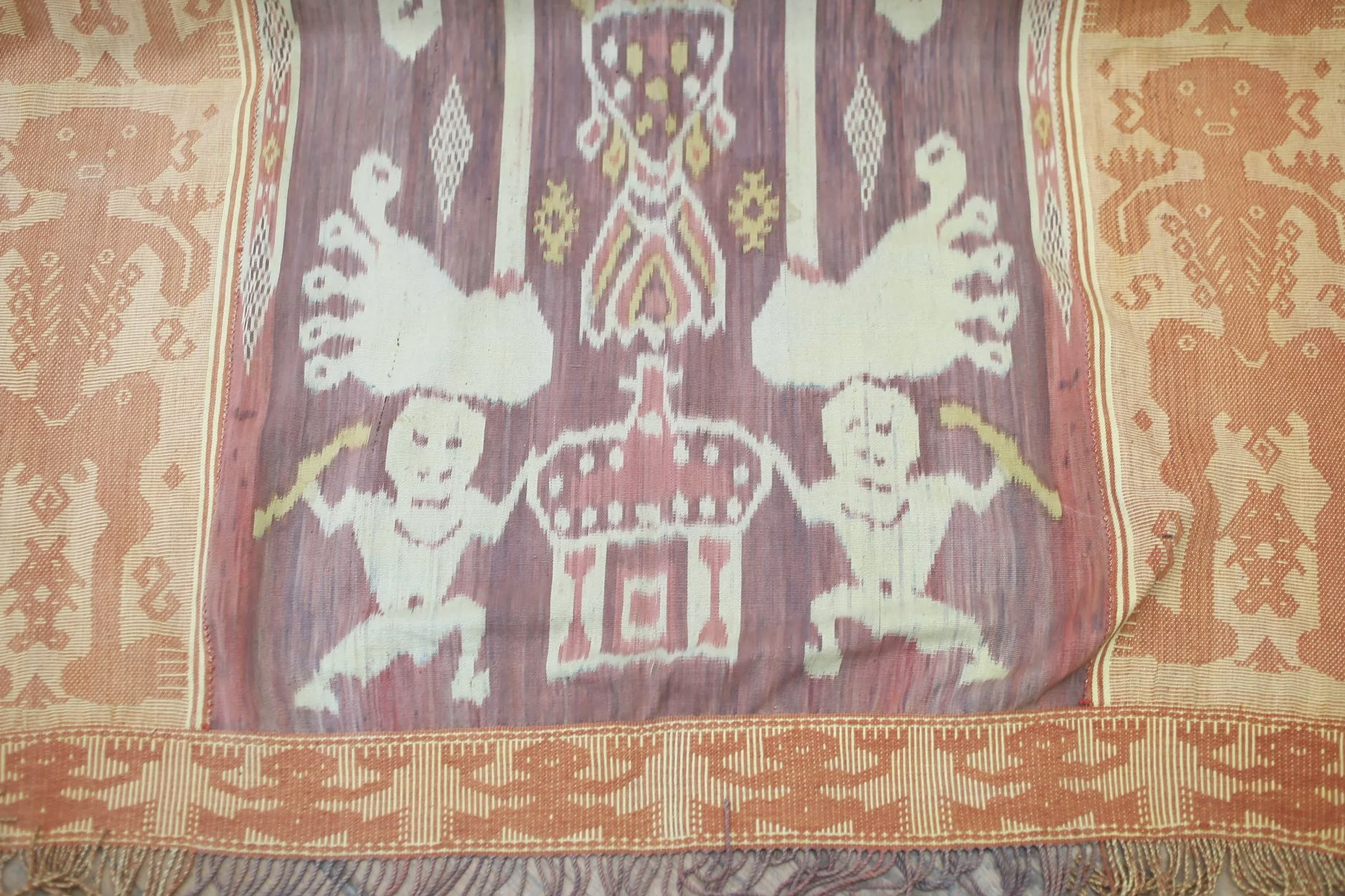 Image 5 of 6
 Image 6 of 6