 Image 1 of 5
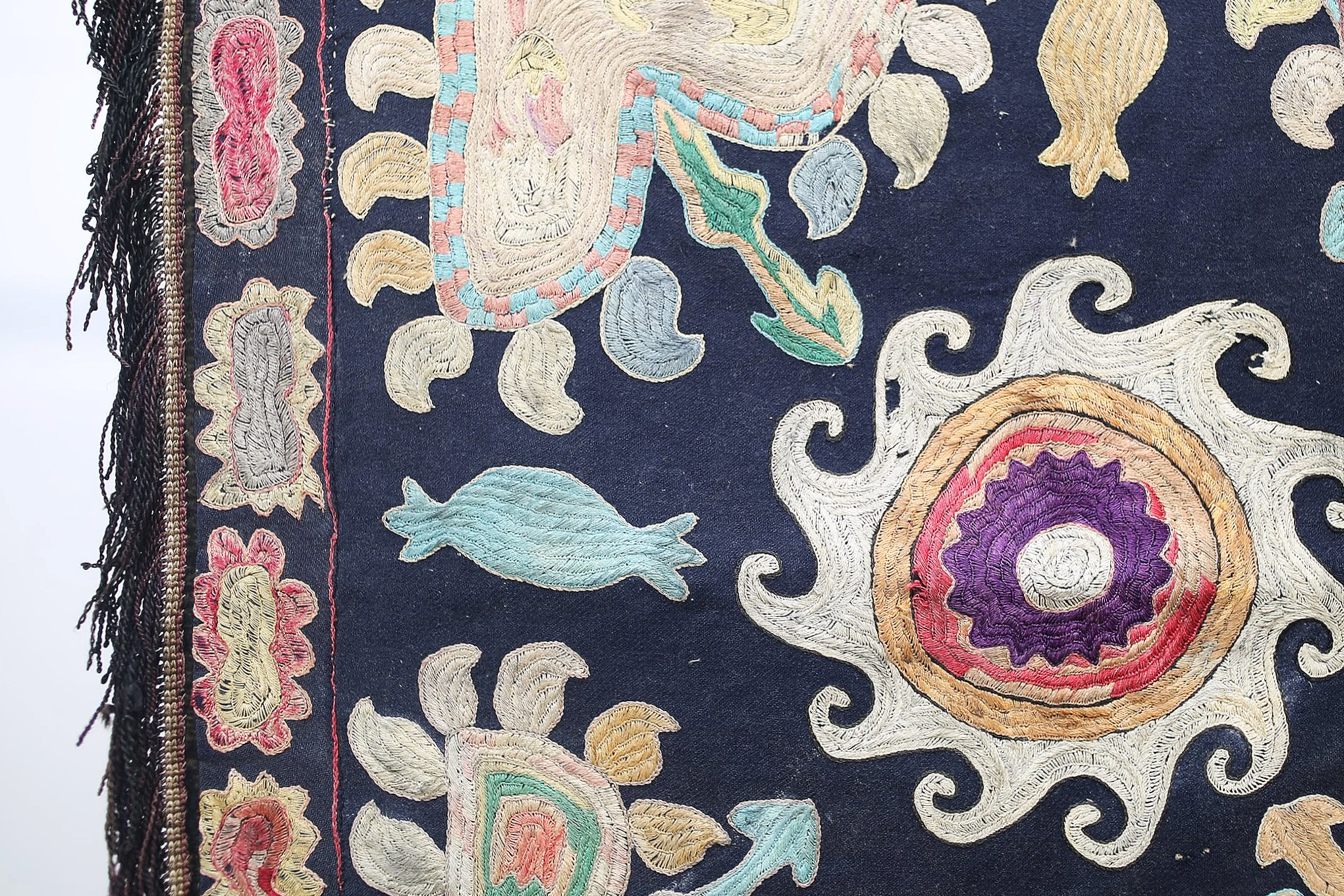 Image 2 of 5
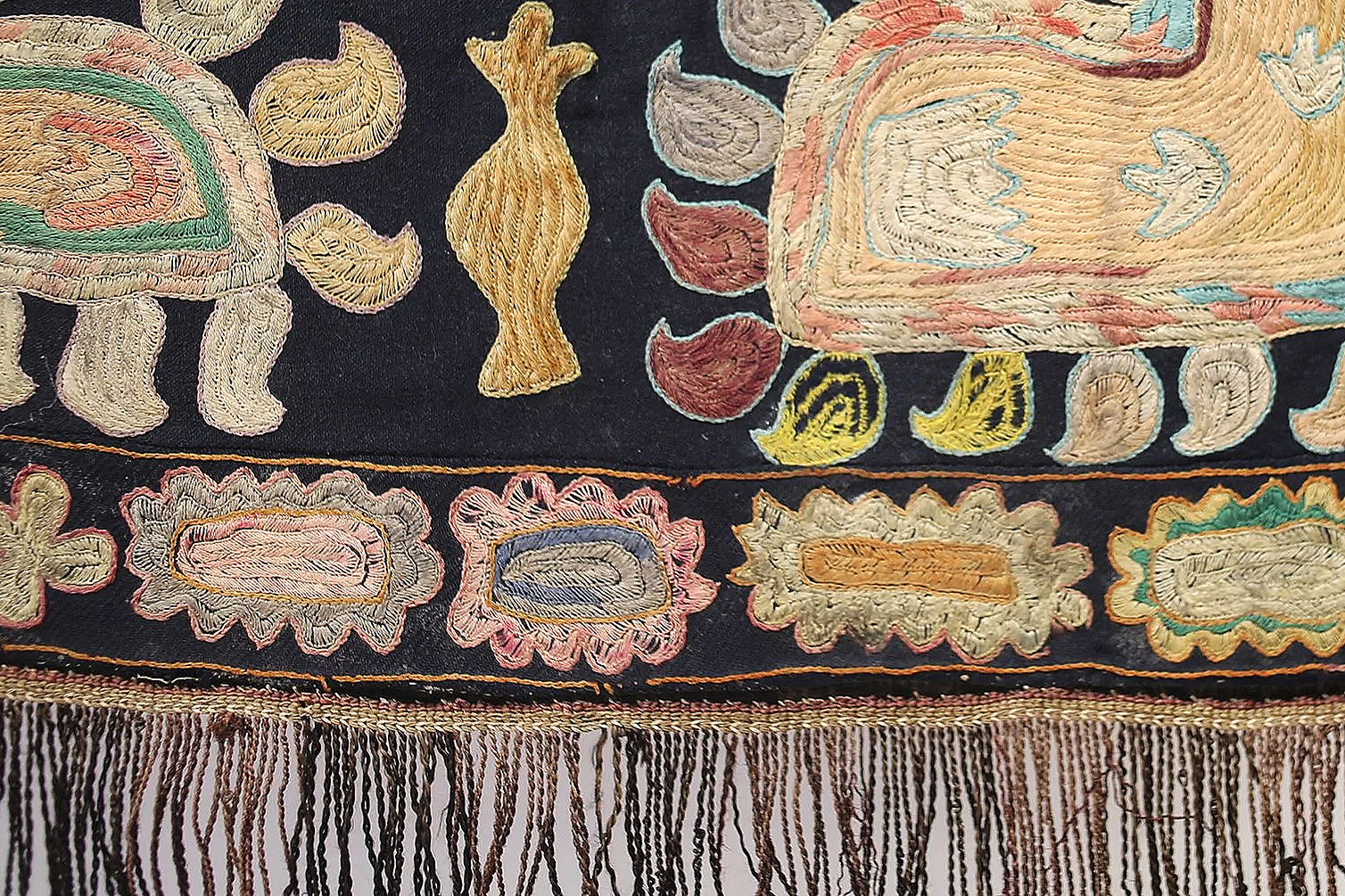 Image 3 of 5
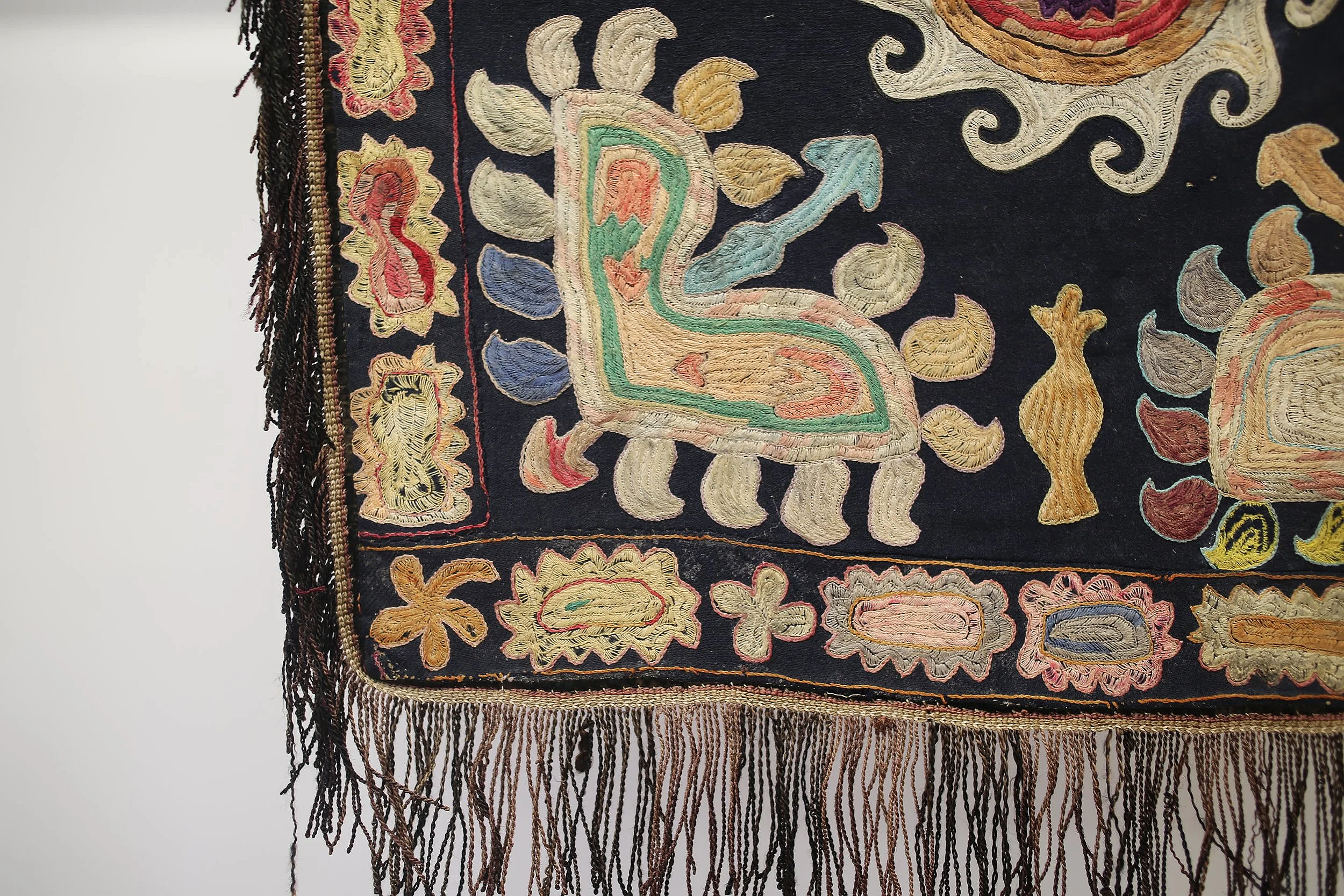 Image 4 of 5
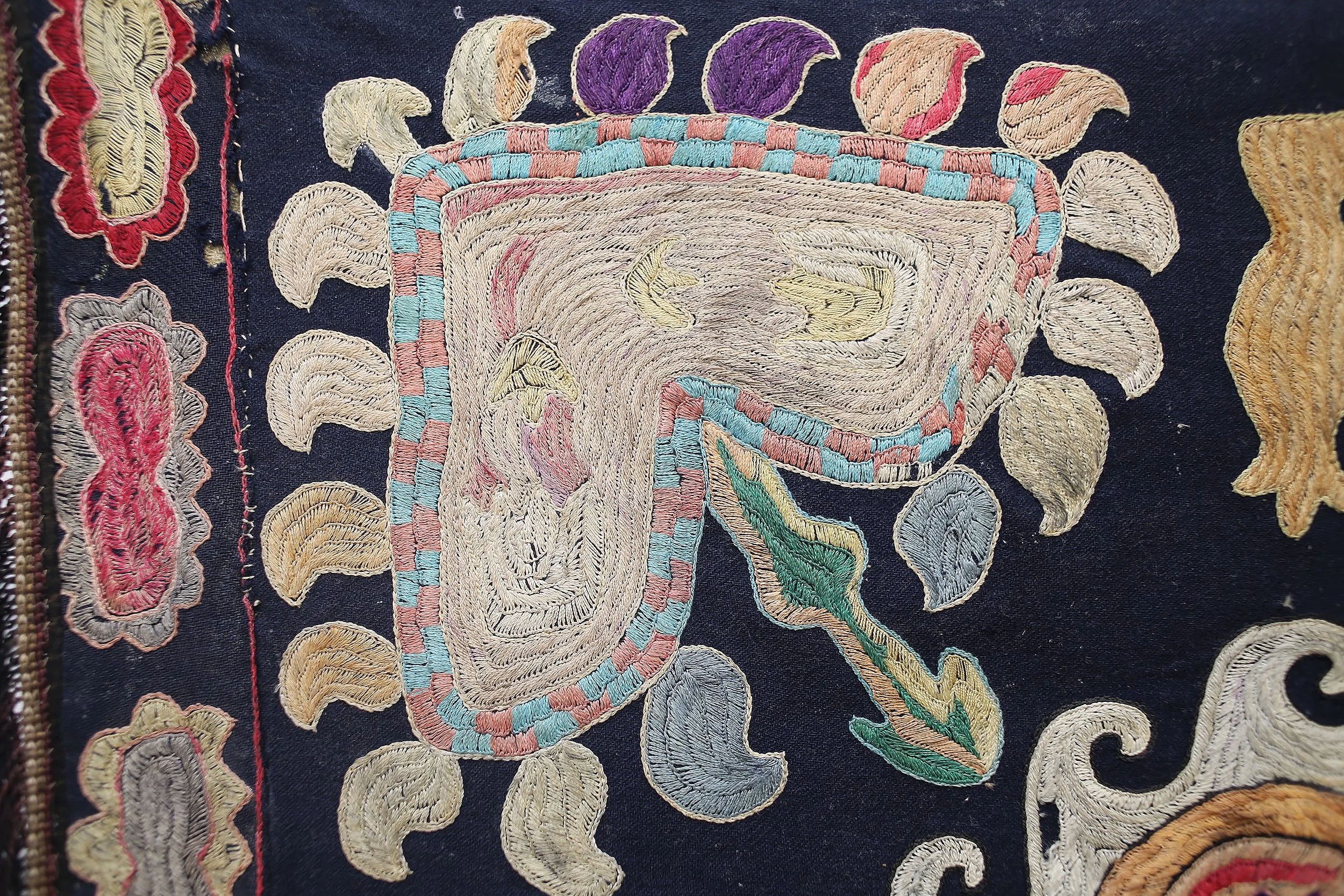 Image 5 of 5
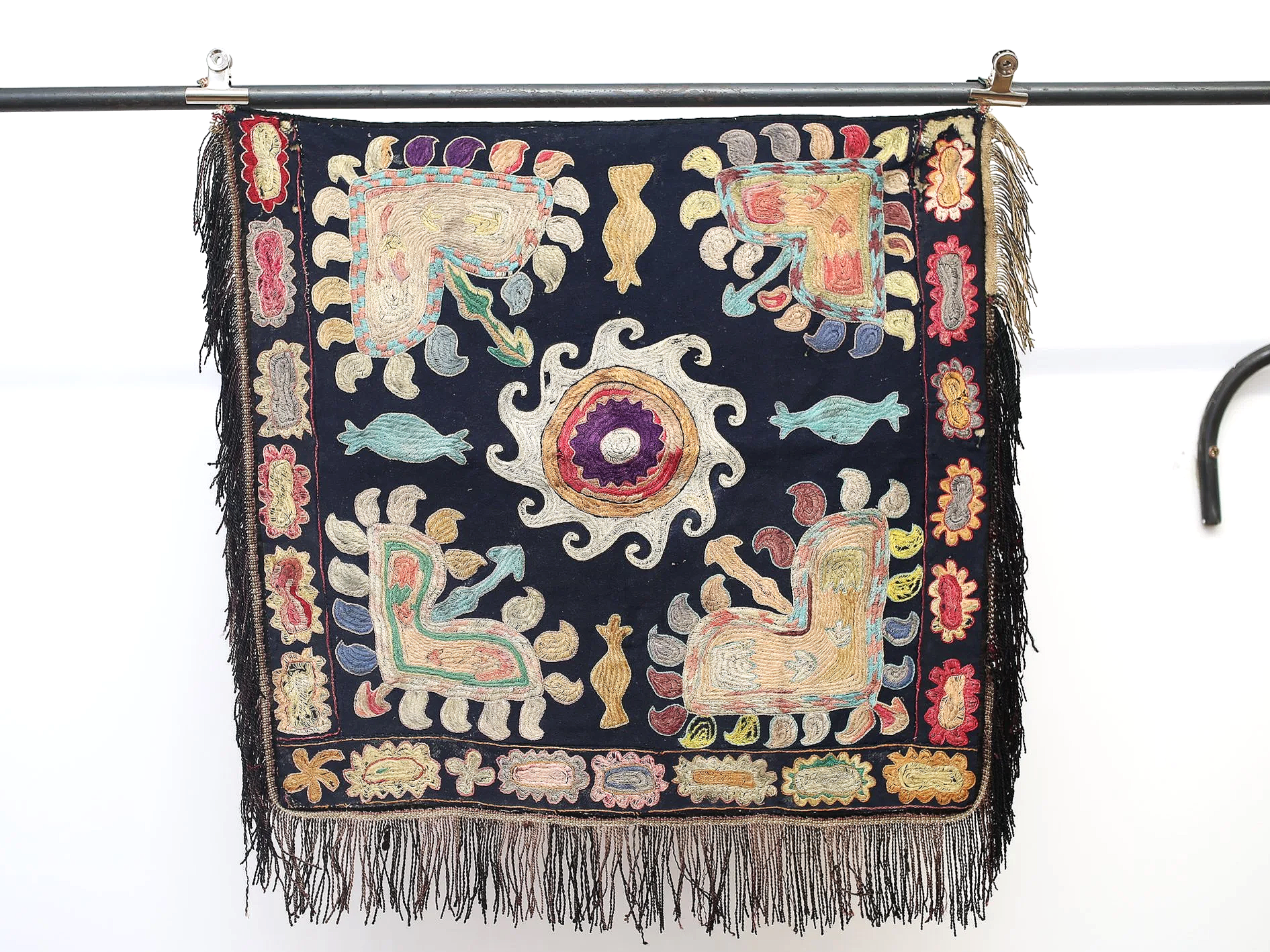
Made of silk and cotton, textiles like this one are referred to as suzani, which comes from the Farsi word for needle. Though they are found across Central Asia, the textiles originated in Uzbekistan and are most commonly created by Uzbek women, as this one is. Traditionally, brides and their mothers hand-embroidered the pieces to present to the groom on the wedding day. Often a girl and her mother began working on the textiles for her dowry before the age of 10. Female relatives and neighbors frequently joined in to help as the wedding approached. The embroidered pieces that a bride brought to the marriage demonstrated her family’s wealth and status as well as her embroidery skills. Women could gain great esteem in their husband’s family and in the community through their talent for embroidery. Suzani textiles like this one served as home decoration following the wedding.
Holes, and stains due to age.
Wool, silk and cotton thread.
C.1970’s
60×56cm
Made of silk and cotton, textiles like this one are referred to as suzani, which comes from the Farsi word for needle. Though they are found across Central Asia, the textiles originated in Uzbekistan and are most commonly created by Uzbek women, as this one is. Traditionally, brides and their mothers hand-embroidered the pieces to present to the groom on the wedding day. Often a girl and her mother began working on the textiles for her dowry before the age of 10. Female relatives and neighbors frequently joined in to help as the wedding approached. The embroidered pieces that a bride brought to the marriage demonstrated her family’s wealth and status as well as her embroidery skills. Women could gain great esteem in their husband’s family and in the community through their talent for embroidery. Suzani textiles like this one served as home decoration following the wedding.
Holes, and stains due to age.
Wool, silk and cotton thread.
C.1970’s
60×56cm